

I’ve undertaken a bit of self reflection lately on some of my previous work. Specifically the analysis I did back in 2023 around disruption being central to the 21st Century business model (i.e. the new normal). At the time, I was exploring a world in which organisations would face increasingly frequent shocks, whether technological, geopolitical, economic or environmental.
For context, I was pondering, like many others, what happens when the AI market experiences its own moment of disruption. Maybe it’s a bubble. Maybe it’s a supply chain shock. Maybe it’s some black swan event we haven’t even imagined yet. Looking back at the architectural patterns I was writing about at the time, it led me to a different question. What matters more for businesses? The biggest model, or the most resilient environment?
History tells us that every major technology boom eventually moves from experimentation to consolidation. The internet survived the dot-com crash. Cloud survived the hype cycle that followed. What mattered in the end was not who grew the fastest, but who became indispensable enough to remain standing when the market corrected.
So if the current AI boom were to experience a similar correction, the most important question may not be which company has the smartest model but which ones can continue delivering AI at all. That distinction matters because of the surprisingly narrow foundation of today’s AI ecosystem.
Despite the appearance of intense competition, an enormous portion of the market ultimately depends on the same underlying compute infrastructure. Models and applications and agents are in fierce competition. But beneath the surface much of the industry converges on the same supply chain.
That makes the AI economy a resource economy and history has not always been kind to industries built upon assumptions of unlimited resource availability. This is where IBM stands out.
Unlike many organisations currently benefiting from the AI boom, IBM’s future appears less dependent on AI enthusiasm itself. That feels like an important distinction, particularly when viewed through the lens of the cloud era. During the early 2010s, IBM competed aggressively in a market that ultimately consolidated around hyperscale cloud providers. It is difficult not to conclude that some important lessons were learned and, as a result, their AI strategy emerging today looks very different.
Even if the current AI boom came to an abrupt end tomorrow, organisations would still need to process transactions, serve customers, move goods and make decisions. A significant portion of that operational reality continues to touch IBM technology somewhere within the stack. That does not make IBM immune to an AI correction. Growth expectations would certainly change and investment priorities would definitiely shift. But IBM would still have a substantial role to play in helping customers apply AI to mission-critical workloads.
So while much of the market has been competing to build smarter AI, IBM appears to have spent equal time preparing for a world in which AI itself becomes a source of instability. The objective is not necessarily to win the AI race. It may be to ensure that customers can continue running it regardless of how the race unfolds.
Their approach seems to be based around the question of exactly how much AI capability organisations need, and where they need it. That’s subtley different from where much of the current market is in assuming that increasingly powerful AI requires increasingly large AI infrastructure.
Red Hat, OpenShift, watsonx, Granite, hybrid cloud, AI governance and physical infrastructure are collectively a very compelling product strategy. But together they form part of something far more profound. Through investments in IBM Z, Power, Telum and Spyre, IBM is effectively asking whether many enterprise AI workloads can be delivered closer to where work already occurs. In tech-lish, that translates to a simple proposition. Not every business problem requires a frontier model trained and operated on dedicated AI infrastructure. Many can be solved closer to where the work, data and transactions already exist.
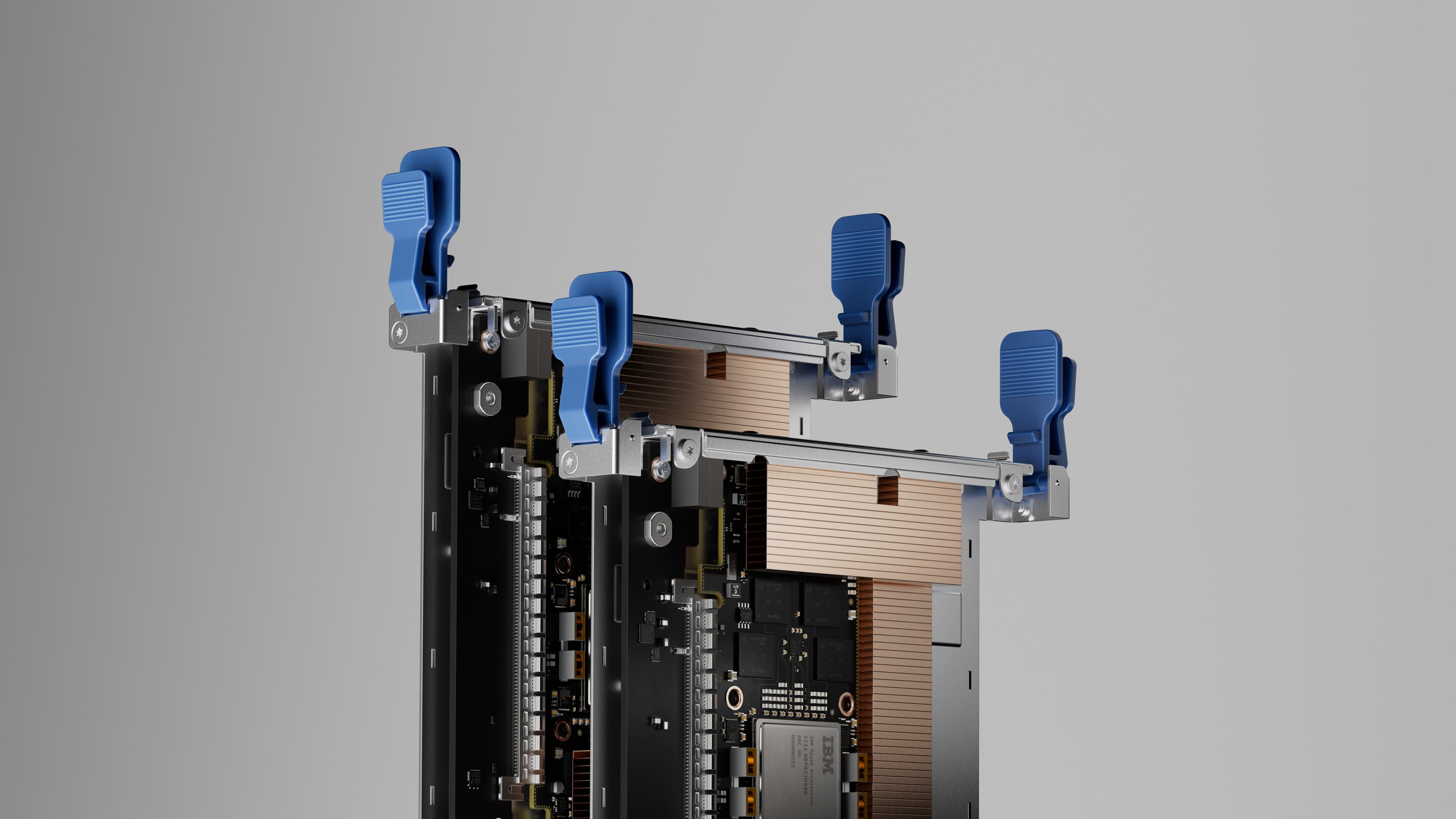
For example, fraud detection, decision support, workflow automation and operational intelligence may prove just as valuable when delivered directly within existing enterprise environments, closer to the transaction, the process and the decision itself. In other words, rather than moving the work to the AI, move the AI to where the work already happens. And perhaps, welcome hybrid back to the AI discussion.
This is perhaps the most overlooked aspect of the current AI debate. Most organisations do not exist to train AI models. AI is not the purpose of the business. They exist to process transactions, serve customers, manage assets and make decisions. Historically, enterprise computing has been optimised around those outcomes, measured by things like reliability, throughput, availability, security and predictable operating costs. AI introduces a new capability layer, but it does not eliminate those underlying requirements. In fact, it may reinforce them.
I’ve written elsewhere about the cost problem, most recently here, and it’s a topic we’ll keep circling back to until the industry resolves it. Because no matter how impressive the model, it ultimately has to justify itself against the economics of the business process it is intended to improve.
For now, the market has largely avoided answering the more fundamental question as to whether the future of enterprise AI belongs exclusively to organisations operating enormous GPU clusters, or whether a significant proportion of business value be generated much closer to the transaction itself. During this boom that we are in, that distinction barely matters. Infrastructure is plentiful, investment is outrageously abundant and organisations naturally gravitate towards the most capable solutions available.
HOWEVER, a major market correction immediately changes the equation. Suddenly the question is no longer theoretical. It becomes one of the first questions the market explicitly or implicitly answers. Organisations will gravitate towards the architectures that continue to function under constraint (the 21st century constraint we have to reinvent for).
Telum is a useful example because it embodies a very different architectural assumption. Rather than moving the transaction to the AI, what if the AI happens where the transaction already exists? Today that distinction barely matters because AI infrastructure is plentiful and the market naturally gravitates towards capability in the form of bigger models, faster inferences and larger clusters.
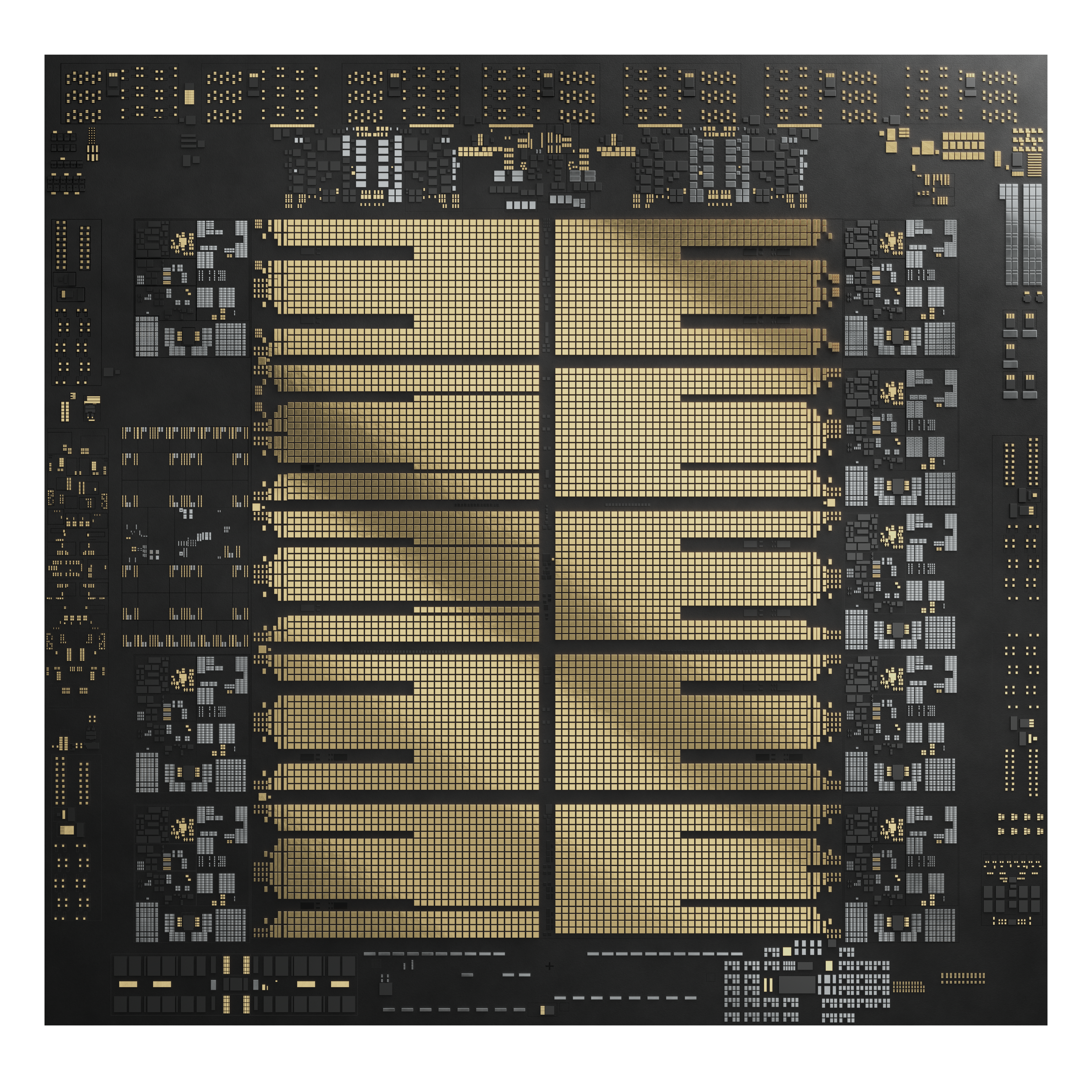
But disruptions have a habit of exposing assumptions. When infrastructure becomes constrained, expensive or unavailable, the question changes from who can deliver the most AI to who can continue delivering enough AI to keep the business running. That is where IBM’s architecture rises to the top.
Unlike many participants in the current AI ecosystem, they are not dependent on a single layer of the stack. Post Cloud 1.0 IBM has spent years assembling an end-to-end architecture capable of delivering AI across multiple environments. I am not for a second suggesting that they can replace the hyperscale AI ecosystem. But I am certainly suggesting that IBM possesses enough of its own infrastructure and AI capability to continue creating meaningful business value while others are still trying to secure access to theirs.
If that assumption proves correct, resilience may not simply come from owning infrastructure but from owning enough of your own infrastructure to keep operating when the market around you becomes unstable.
The concept of IBM’s AI resilience does not stop with IBM. It extends to every software provider, partner and customer building on top of that ecosystem. Because, especially in Australia’s mid market, infrastructure resilience is rarely something organisations buy directly. It is something they inherit, and often without even realising it. So the Australian organisations most insulated from an AI infrastructure correction may not be the ones operating AI platforms themselves. They may be the organisations consuming software and services built upon platforms that were designed to endure disruption in the first place, even if they weren’t the ones to think about it.
Consider Australian software provider Pronto Software, and the thousands of mid-market organisations that depend on them every day. Most customers think they are purchasing software, when what they are really purchasing is software, architecture and resilience.
So when a software provider, like Pronto, builds AI capabilities on top of an enterprise-grade ecosystem, their customers gain more than access to new functionality. They gain access to the resilience characteristics of the underlying platform itself. And in these uncertain times, even beyond AI sovereignty, that will prove increasingly important.
A Pronto mid-market manufacturer, distributor or local government customer is unlikely to care which model generated an answer. Nor whether a recommendation or report originated from one foundation model or another. They care whether payroll runs and whether orders are processed. They care whether customers are served and whether operations continue.
In that environment the discussion shifts from AI capability to AI continuity. And they are not the same thing. Because when the excitement fades, and we all remember how quickly it does, organisations will discover that intelligence was only one part of the equation. The real test was whether the architecture could endure, whether the platform could continue operating, and whether their tech partners showed up for work on Monday.
About Councilio
Councilio provides independent technology analysis, executive briefings, keynote speaking, workshops, and strategic advisory services.
Learn more: councilio.co